

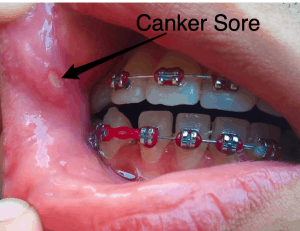
Canker sores. Everyone hates them. When you have braces, you hate them even more. Before we go into ways of treating canker sores, let’s explore the reason we get them in the first place.
Canker sores are the most common type of mouth ulcer. It is a misconception that they are a form of herpes virus. This is not true, and canker sores cannot be passed between people.
Nobody knows for sure what causes canker sores, but there are many theories. For example, it is believed that toothpastes and mouthwashes containing sodium lauryl sulfate can dry the mouth tissues and encourage canker sores. Stress, immune system reactions, family history, and mouth trauma may cause them. Women may sometimes get them at certain points in their menstrual cycle from hormonal changes and fluctuations. Some food allergies or intolerances (such an intolerance to gluten or Celiac Disease) may be responsible. In addition, deficiencies of vitamin B-12, zinc, folic acid or iron may play a part.
The presence of other ulcerative diseases, such as Crohn’s Disease, IBS, or digestive ulcers may have an effect as well. Doctors now believe that some of these ulcerative diseases may be caused by H. pylori and other bacteria. A simple blood test will tell you if you have H. pylori bacterium, which is treated with oral antibiotics. If you get frequent mouth sores that do not heal well, especially if you also have other ulcerative or digestive problems, you should talk not only to your dentist about it, but your medical doctor, because it could be a symptom of a larger problem, as is detailed on this page from the Mayo Clinic.
But no matter the cause, canker sores are bothersome and painful, especially if they occur inside your lip near a bracket.
Most canker sores last 10 to 14 days and can be treated with over-the-counter remedies. If you get frequent canker sores, talk to your dentist about it, because there are some prescription-strength products that he/she might recommend instead, such as Debacterol®. Doctors also use steroids such as dexamethasone (Decadron)mouth rinse or prednisone (Orasone) tablets. Antibiotics, such as tetracycline (Sumycin) mouthwash, are also sometimes prescribed.
If you get a canker sore only occasionally, you can treat it with many products readily available without a prescription at your local pharmacy or on the Web. There are many options. The following list isn’t meant to endorse any of these products, it’s just to inform you about what’s currently on the market:
-
Products that form a protective film over the sore for several hours can help it to heal. These include Zilactin-B, Colgate Ora-Base, Rincinol PRN mouth rinse, Orajel Products, and Canker Cover.
-
Products that help kill some of the bacteria in your mouth may help. These include Biotene mouth rinse and Colgate Peroxyl mouth rinse. (Mouthwashes containing alcohol, such as Listerine, may sting too much for you to use comfortably). Also, there is CankAid oral antiseptic made of carbamide peroxide, the same ingredient used to bleach teeth!
-
Products that temporarily numb the area bring short-term relief, such as Anbesol or Orajel.
-
Products that don’t contain certain irritating chemicals such as sodium lauryl sulfate may help. This retail website that has a number of “sls-free” toothpastes.
-
Perhaps you’d rather try a more natural approach. Here is a list of holistic remedies you may want to try. Also, here are some herbal suggestions and homeopathic suggestions for canker sores.
-
Some alternative products are sold on the Web that claim to help heal and prevent canker sores, such as Canker-Rid, which is made from honey bee propolis and claims to work.
-
Readers from our Metal Mouth Message Board have told us about a couple of sensible and interesting remedies:
-
Rinse your mouth with salt water. This is a good way to ease a lot of oral or throat irritations. The salt water also acts as a mild antibacterial.
-
Avoid acidic foods which can irritate your mouth sores (e.g., citrus juices, tomato-based products, oral vitamin c)
-
Ask your dentist or orthodontist about a prescription mouth rinse (often called “Miracle Mouthwash” or “Magic Mouthwash”) made up of Diphenhydramine (Benedryl), Lidocaine, and Maalox-type aluminum/magnesium antacid. Several Message Board readers claim that this works very well. This website has a number of recipes for “Magic Mouthwash” which you might find helpful.
-
-
Here are a few websites that provide copious information about canker sores:
Try several remedies and see what works best for you. If the canker sore is irritated by a nearby bracket, you can also ease the pain by applying plenty of dental wax or dental silicone on the offending bracket. This forms a barrier between your the bracket and the sore. Doing this, in combination with the remedy of your choice, will help heal the sore.
If you have a favorite remedy that is not listed on this page, please email us and we will include it!